HoF webinar serie – From Specifications to Meaning: Implementation Guides & Logical Models
As European healthcare systems move closer to making the European Health Data Space (EHDS) a reality, the conversation is evolving. It is no longer just about understanding interoperability standards, it is about turning them into something that actually works in everyday hospital environments.
The fourth and fifth sessions of the Hospitals on FHIR webinar series explored two essential pieces of that puzzle: Implementation Guides and Logical Models. While often perceived as technical topics, they are in fact central to bridging the gap between standards and real-world use.
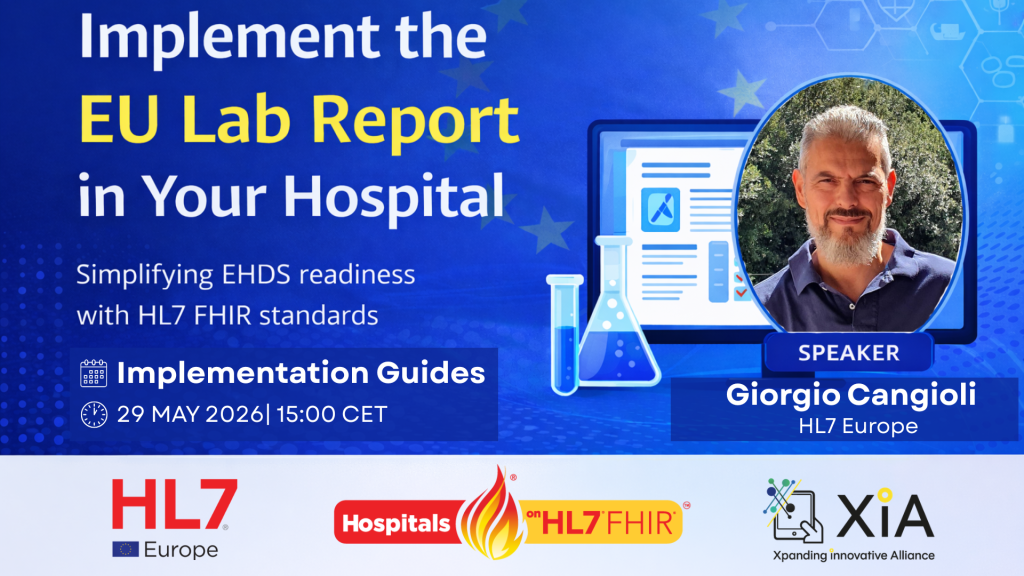
The fourth session, delivered by Giorgio Cangioli (HL7 Europe), focused on Implementation Guides and their role in making standards usable. Standards like HL7 FHIR provide a common language, but they remain too generic to be applied directly in practice. Implementation Guides bring the necessary level of precision. They define how FHIR should be used in a specific context, introduce constraints, and provide concrete guidance that ensures systems built by different actors can truly work together.
In that sense, Implementation Guides are what make interoperability operational. They transform a shared language into shared practices, enabling hospitals, vendors, and countries to align not just in theory, but in deployment.
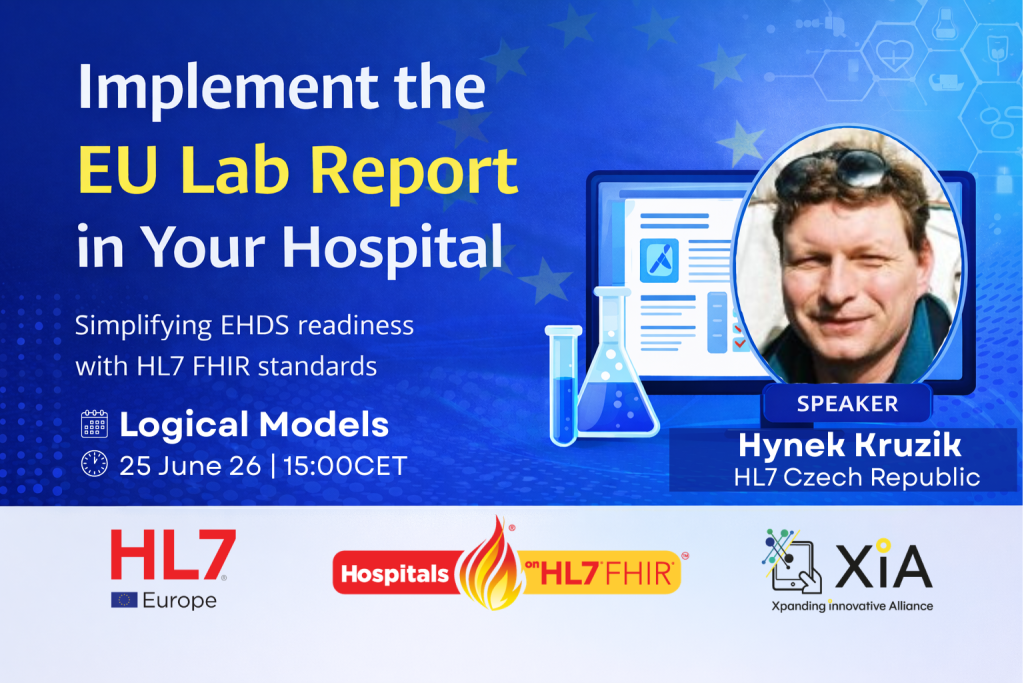
The fifth session, delivered by Hynek Kruzik (HL7 Czech Republic), shifted the focus to Logical Models. If Implementation Guides define how systems exchange data, Logical Models define what that data actually represents. They describe real-world concepts: such as a patient, an observation, or a report ; in a structured and consistent way, without being tied to any technical implementation.
This distinction is critical. Interoperability is not only about moving data from one system to another; it is about ensuring that the meaning of that data is preserved and understood. Without a shared understanding of concepts, even perfectly functioning technical exchanges can lead to misinterpretation or unusable information.
Seen together, Implementation Guides and Logical Models highlight a deeper transformation brought by FHIR and the EHDS. Interoperability is moving beyond technical connectivity toward something more ambitious: meaningful and scalable data exchange across Europe.
For hospitals and solution providers, this implies a shift in perspective. It is no longer sufficient to “support a standard.” Organisations need to understand how data is structured, how it is constrained in real use cases, and how different stakeholders, clinical, technical, and organisational, align around it.
This is precisely where initiatives like XiA play a role. By focusing on practical, modular learning, XiA aims to equip professionals with the skills needed to navigate this complexity and turn interoperability requirements into operational reality. As outlined in the project’s communication and dissemination strategy, building these competencies across the ecosystem is essential to support large-scale adoption and ensure the long-term impact of the EHDS .
These two sessions mark an important step in the “Hospitals on FHIR implement the EU lab in your Hospital journey”. They show that interoperability is not just about standards, but about the combination of structure, meaning, and implementation. And ultimately, this is what will determine whether the EHDS remains a vision, or becomes part of everyday clinical practice.